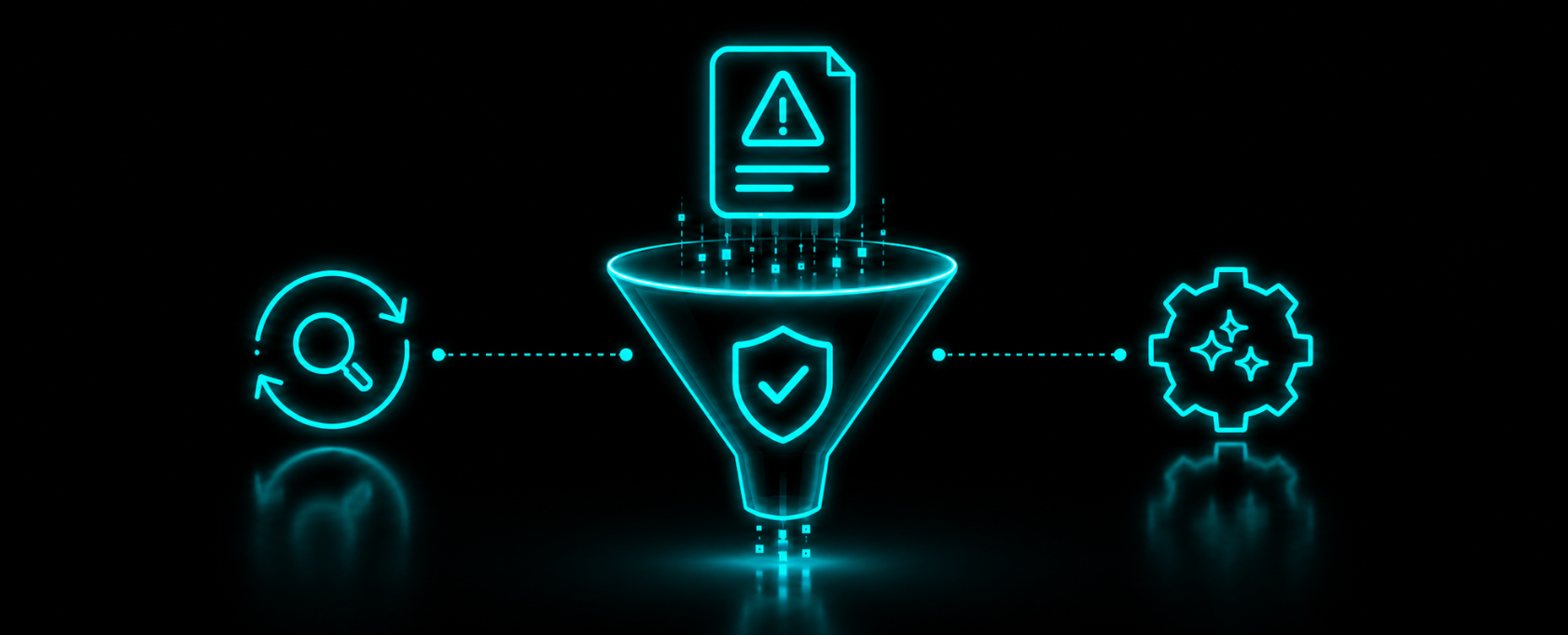
For the last few years, the industry has treated policy as code as the answer to cloud governance. Write rules. Evaluate configurations. Block or alert when something violates policy. On paper, that sounds like control.
In reality, it mostly produces noise.
Policy as code was designed for a world where humans wrote infrastructure slowly and deliberately. That world is gone. AI systems now generate infrastructure faster than teams can review it, reason about it, or fully understand the implications of every change. In that environment, policies that only detect problems are not controls. They are commentary.
The uncomfortable truth is that most policy engines stop at judgment. They tell you something is wrong and then hand the problem back to a human. Someone still has to interpret the finding, understand the context, write a fix, validate it, and push it through review. At scale, that work does not happen consistently. Backlogs grow. Exceptions multiply. Policies get tuned down or ignored.
That is not governance. That is wishful thinking.
As AI becomes a default contributor to infrastructure, the gap between detection and correction becomes the most dangerous part of the system. You can have perfect policies and still fail operationally if those policies do not reliably result in safe, consistent changes to code.
This is where the idea of control needs to evolve.
Real cloud control is not about deciding whether something is compliant. It is about ensuring that infrastructure converges to an intended state without relying on heroics, tribal knowledge, or best intentions. Control has to be executable.
In practice, that means policies must be coupled to deterministic action. When a policy is violated, the system should know exactly how to correct it in code. Not suggest. Not recommend. Not open a ticket. Fix it in a way that is predictable, reviewable, and aligned with how the organization actually builds and operates infrastructure.
This distinction matters even more in an AI-generated world. Large language models are probabilistic by nature. They are excellent at producing plausible configurations, but they do not reason about long term operational impact, organizational standards, or historical failure modes. They cannot be the final authority on infrastructure correctness.
That authority has to live in the control plane.
A modern control plane does not argue with AI. It constrains it. It allows AI to move fast while ensuring that outcomes remain safe, consistent, and intentional. It treats AI-generated code the same way it treats human-generated code. Subject to policy. Subject to correction. Subject to enforcement that actually changes the system.
This is why simply adding more policies does not solve the problem. More rules without automated correction just increase friction. Teams spend more time debating findings than improving infrastructure. Security becomes a bottleneck again, even though the tooling looks sophisticated.
The shift that platform teams are starting to make is subtle but important. They are moving from governance that observes to governance that acts. From policies that explain what should have happened to systems that ensure it does.
That shift is what makes cloud control possible at scale.
In 2026, the question will not be whether you have policies as code. Everyone will. The real question will be whether those policies actually control anything in an environment where AI writes infrastructure by default.
If your controls cannot close the loop in code, they are not controls. They are opinions.