AI is now embedded across the security stack. It is in our SOC tooling, our testing pipelines, our vulnerability scanners and increasingly in our remediation workflows. The industry has embraced it quickly, and for good reason. The capabilities are real.
But the impact of AI on cybersecurity is not uniform. In some areas it delivers meaningful acceleration. In others, it introduces new complexity. The difference comes down to how today’s AI systems are built and what defensive security actually requires.
Most current AI models are non-deterministic. They are designed to predict likely outcomes, recognize patterns across large datasets and generate responses based on probability. That makes them extremely powerful for processing massive volumes of information and identifying correlations humans would miss.
This is why AI works so well in security operations centers. SOC teams are overwhelmed by telemetry. Thousands of alerts, signals across cloud environments, identity systems, endpoints and networks, all needing correlation and prioritization in near real time. AI excels at this type of scale problem. It can automate large portions of the SOC playbook, reduce noise and surface meaningful signals faster than any human team. Engineers still make the final call, but they do so with better inputs and less manual triage.
AI is also highly effective in security testing. It can explore code flaws, evaluate infrastructure and networking configurations and automate large combinations of attack techniques to identify viable paths. From external penetration testing to SAST and DAST analysis, automation powered by AI delivers significant gains. That benefits organizations running internal testing, and it benefits adversaries as well.
In both of these areas, AI is operating in exploration mode. Variation is acceptable. Multiple attempts are expected. The system is searching across possibilities.
Defensive remediation is a different problem.
When a vulnerability or misconfiguration is identified in a production environment, the next step is not exploration. It is correction. That correction must be precise, contextual and reliable. Security configurations are deeply environment specific. A change that aligns with a general best practice may not align with a particular architecture. A remediation that appears correct in isolation may introduce side effects when deployed into a complex infrastructure.
This is where many generative AI approaches fall short. Large language models generate suggestions. They are often plausible and well structured. But they are also non-deterministic. Given the same issue, they can produce different outputs depending on subtle variations in prompts or internal state. That variability is acceptable when drafting documentation or summarizing research. It is not acceptable when modifying production security configurations.
If a security practitioner receives a suggested fix that still requires investigation to determine whether it is safe and accurate for their environment, the workload has not been reduced. It has been shifted. Instead of spending time finding the answer, the team now spends time validating whether the AI’s answer is correct.
In defensive security, accuracy and consistency are not optional. A single incorrect change can create an attack path and expose the organization to a successful breach. There is no tolerance for “almost right.”
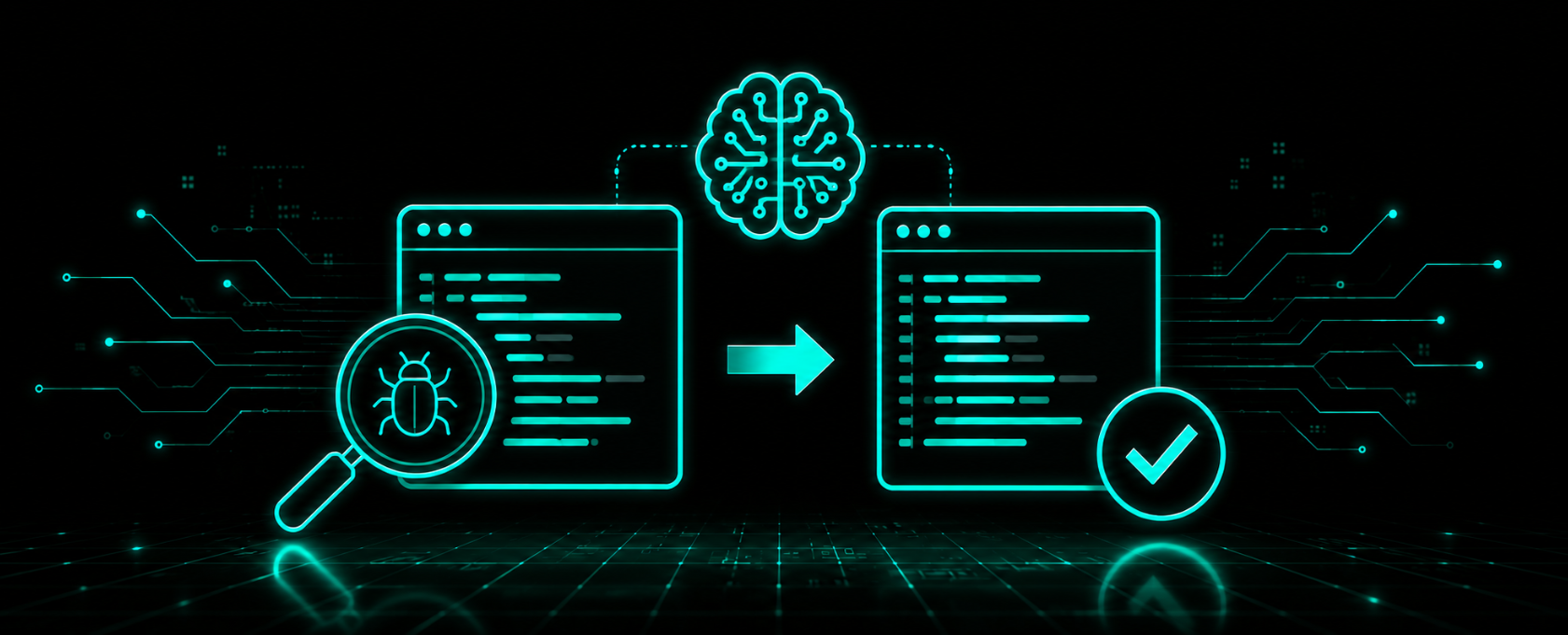
A deterministic approach to defensive security operates differently. It processes the full context of the specific environment. It produces code-level changes that directly address the issue at hand. Those changes are consistent, repeatable and validated before they are applied. The goal is not to generate possible solutions. It is to implement the correct one.
AI is already reshaping cybersecurity. It is accelerating testing. It is improving SOC operations. It is giving attackers new scale. But if we want AI to truly strengthen defense, we have to be honest about where probabilistic models fit and where they do not.
Defensive security does not need more suggestions. It needs systems that can deliver precise, contextual and fully tested corrections. That requires a different architectural approach than the generative models dominating headlines today.
The conversation about AI in security should not start with capability. It should start with tolerance. Where exploration is acceptable, probabilistic AI thrives. Where precision is mandatory, determinism becomes the requirement.