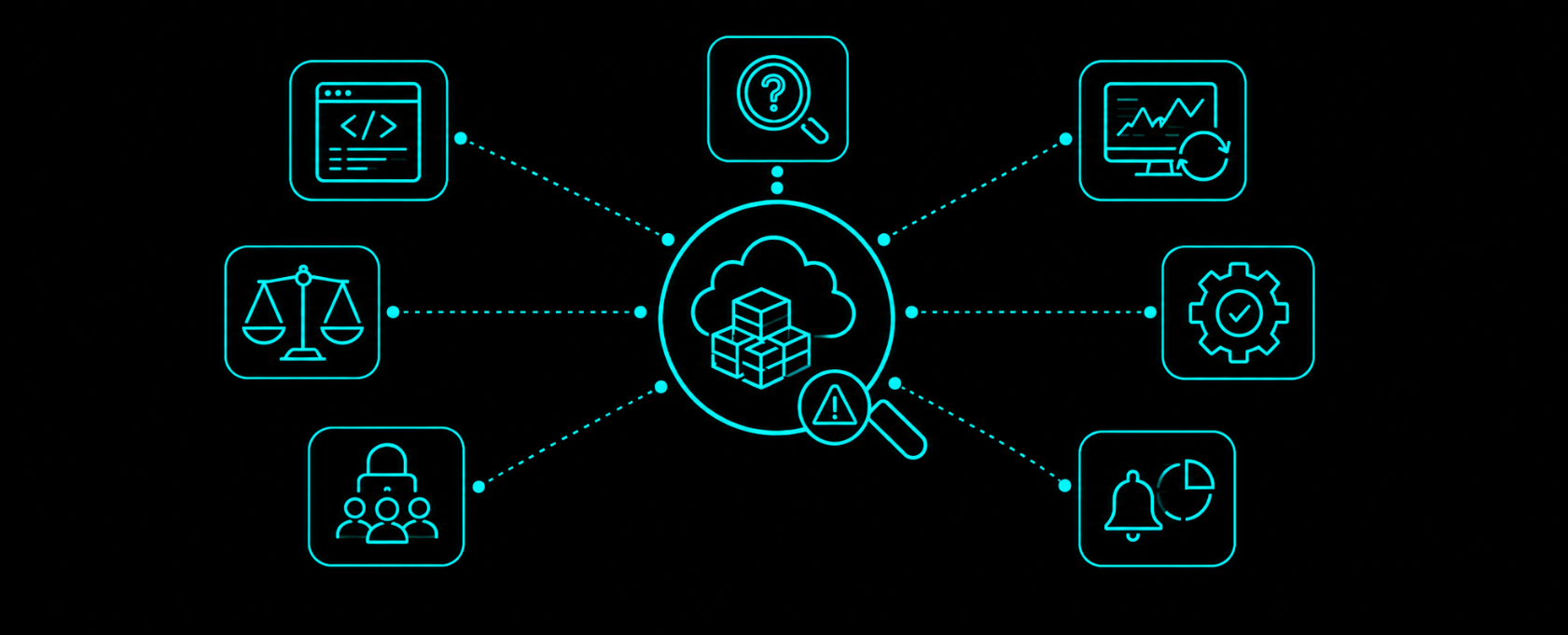
Vibe coding is a phrase used to describe a type of coding in which user creates the prompt and an AI program is used to code most of the code behind the object. In this process, the user tells about a feature which should be created, while an algorithm is working on its own without any possible human errors. With the help of the vibe coding method, the process of creation of some software has become faster.
However, the problem of speed and security existed before and AI coding applications didn’t solve the problem, they just changed the place where it appeared. It was proved by the way of implementation of billions of common coding methods, both good and bad. However, this doesn’t mean that such unsafe coding practices as implementation of the hard-coded secrets or old dependencies will be avoided in this situation.
This article shows how the danger can occur and how to deal with the problem step by step before and after the process of implementation.
Understand the Security Risks of Vibe Coding
The code generated using AI is plagued with real vulnerabilities. One of the errors that lead to issues in the future is the misconception regarding the output from such models. One should pay attention to the use of weak and outdated libraries, as well as hardcoding of credentials in the source code, because that is what has been seen in the training sample. Authentication and authorization logic may be where the most vulnerable areas are hidden, and, if a person were present to determine if there is a flaw, he would definitely catch it. Also, vulnerability from injection can most often be omitted when speaking about generated database queries and even shell commands.
Vibe Coding Security Checklist
1. Define Security Requirements Before You Start Coding
The vast majority of security debt in vibe-coded initiatives comes from neglecting this phase altogether. Prior to engaging with the prompt window, clarify together what the authentication and authorization process for the application should consist of, what data is defined as sensitive, and whether any compliance standards apply. Identify the libraries, frameworks, and APIs that are deemed acceptable for your organization, the absence of which does not constitute a clear policy. Implement these lines of action into a guide that your team can use regularly.
2. Use Trusted AI Coding Tools and Models
Different AI coding assistants have different approaches to security, so you should explore the issue before you settle on one. Examine the sources of its suggestions and the possible privacy and IP issues related to providing your codebase. Does it have any track record regarding secure output? Don’t use any generated code without confirming it is secure, whoever provided it. Finally, create a relevant organizational policy for AI-based development. Without it, each team will have its own rules, and some of them will be wrong.
3. Review AI-Generated Code Before Deployment
Tackle code produced by AI as though it’s a submission from a new employee who possesses necessary skills but lacks knowledge about your systems. The code can be correct and the result perfectly acceptable, but trust still has to be earned. Code review should check for weaknesses related to authentication, authorization, input validation, leaks of sensitive data via logs and error messages, poorly written error handling and hard-coded secrets. The combined approach to use both manual assessment and automatic testing is considered optimal, since both methods will detect different types of errors.
4. Scan Code for Vulnerabilities
Incorporating static analysis, dependency checks and secrets scanning needs to be included in the pipeline and not considered as an afterthought someone does manually before launching something important. Instead of waiting for something to be released so that SAST can be incorporated into the work process. Make use of SCA in order to identify risky dependencies before they are added to the project and not after. Secrets need to be discovered before they hit the repository because once secret info appears in the repository, the process of changing it will take place. Scanning should also apply to containerized applications. These checks should not just be conducted before the launch
5. Secure AI-Generated Dependencies
AI programming assistants frequently add more dependencies than are actually necessary, which can happen, for example, when a proposed code pattern uses a library that the programmer would not normally think of utilizing. Make sure that dependencies are valid and reliable before the use in the project because attacks based on dependency confusion rely on people thinking that packages which have plausible names are safe. Pay attention to any outdated or currently vulnerable package versions. Delete libraries not being used, they pose risks but don't add any value for the project. Take special care while locking package versions and updating them constantly and use software composition analysis tools to assess risks.
6. Secure Secrets and Sensitive Data
This guideline may seem easy to follow, but it is often broken: never hardcode your API keys, passwords or credentials, even in a prototype you promise that you'll clean up later). Instead, use environment variables and a proper secrets management system. Scan your repositories regularly to catch any secrets that have been somehow committed, because at some point there will definitely be a person who pastes the key in a configuration file. Rotate any credentials that have been disclosed, do not just delete them from the file and forget about it. Ensure that the principle of least privilege is applied everywhere and make sure that the AI developer does not expose any confidential organizational data back through logging or telemetry.
7. Secure AI-Generated Infrastructure and IaC
Vibe coding has expanded beyond application logic, producing not only Terraform configurations, Kubernetes manifests, and cloud setups that applications will use. This means that a mistake could have the wider implications. Look out for excessive IAM permissions given for the sake of convenience, publicly exposed resources that were never meant for the outside world, storage configurations not equipped with encryption and unrestricted access to the network since restricting access would require another loop of prompt generation. Check IaC code prior to implementation just as you would do with your application code. This is where tools for automated fixes such as Gomboc come into play as those can take a proper misconfiguration in the code generated by IaC and turn it into a fix compliant with policy without requiring the last-minute work of manually rewriting Terraform files.
8. Build Security Into the Vibe Coding Workflow
The workflow that actually works looks something like this: prompt, generate, review, scan, validate, test, deploy, monitor. Security checks need to run automatically at each of those stages rather than depending on someone remembering to trigger them. Integrate scanning directly into CI/CD so nothing generated locally skips the gate. Block high-risk vulnerabilities from reaching deployment rather than flagging them after the fact. Use policy-as-code to enforce your security requirements consistently instead of relying on individual reviewers to catch the same issue every time. Keep the whole thing auditable, because when something does go wrong, you need to trace exactly what was generated, reviewed, and approved.
Common Vibe Coding Security Mistakes to Avoid
The effective workflow consists of the following steps: prompt, generate, review, scan, validate, test, deploy, and monitor. Security checks should run automatically at every stage instead of relying on people to remember to initiate them. Ensure that scanning is part of CI/CD workflow so that nothing generated on local machines misses the safety gate. Stop serious vulnerabilities before they reach the deployment stage, that is, don’t allow them into the process in the first place – only notify about them afterward. Implement the policy-as-code approach to enforce security policy across all projects instead of relying on individual reviews of separate people who might overlook vulnerabilities.
Secure Vibe Coding Best Practices Checklist
- Define security requirements before you start coding
- Use AI tools your organization has actually vetted
- Review every piece of generated code, no exceptions for prototypes
- Scan source code and dependencies continuously
- Protect secrets with proper management, never hardcode them
- Apply least-privilege principles everywhere, including to the AI tooling itself
- Scan IaC and cloud configurations before deployment
- Automate security checks inside CI/CD
- Monitor production continuously after release
- Remediate vulnerabilities quickly once they're validated
Conclusion
Vibe coding truly accelerates development; this is no hype. However, this acceleration brings trade-offs in terms of the security debt. Unfortunately, the speed has caused the suffering to be carried to the other side and this usually results in a crisis instead of a discovery. The development teams that do it well manage to combine AI-assisted development with genuine scanning, some still technology-resistant human oversight, setting up security regulations before coding starts, and continuing monitoring after deployment.
As the usage of artificial intelligence keeps on increasing, it should be noted that while generating application code together with cloud infrastructure and IaC, great emphasis should be laid on the need to safeguard the infrastructure as well as the application itself. The author of Gomboc believes that his invention uses deterministic AI in order to find and fix any issues related to cloud computing infrastructure and IaC, which enables the development teams to be at vibe-coding speed without leaving numerous security issues behind.
Also Read: